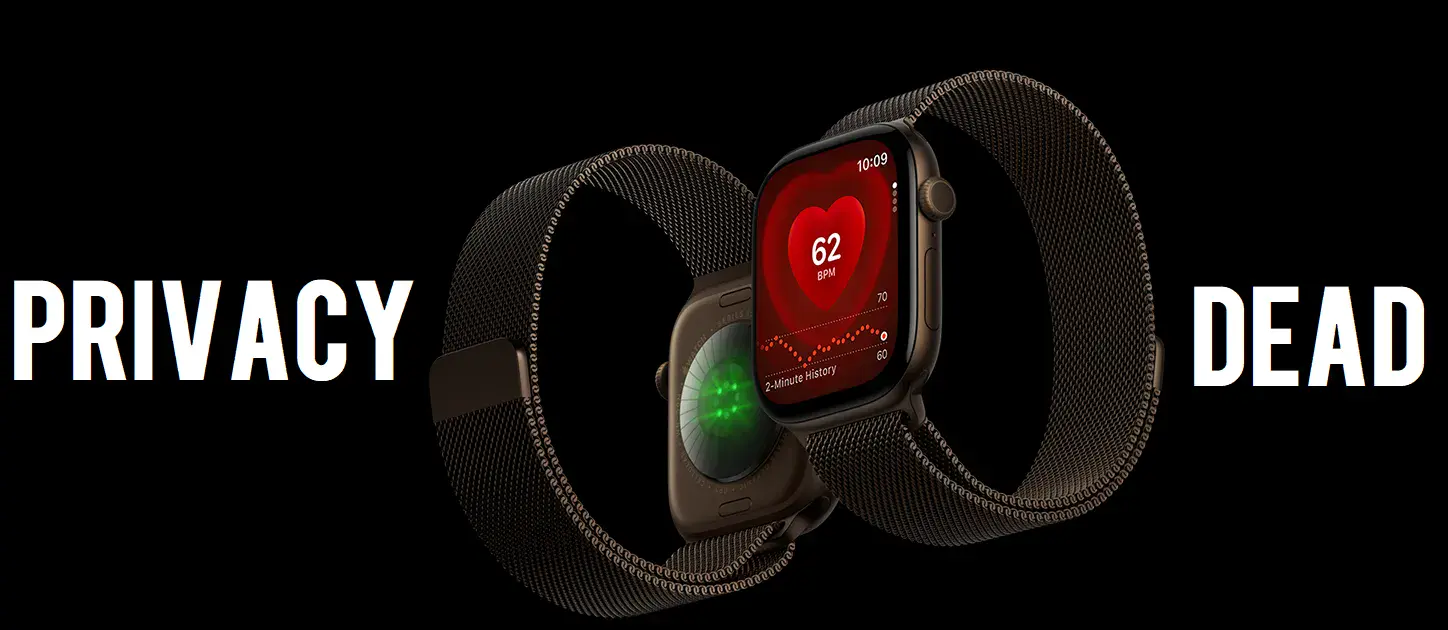
Finally, Apple is listening to its customers -privacy dead Apple Watch 12
Privacy dead Apple Watch 12
The Trojan Update and the Forty-Billion-Dollar Trap
Apple just told the world its newest watch is a routine wellness update, but they quietly turned millions of consumer wrists into ambient corporate wiretaps. Under the radar, a forty-billion-dollar platform empire is colliding with a brutal acoustic trap that records every room you enter.
When the keynote wrapped, reviewers called the Series 12 a boring hardware cycle. Wall Street shrugged, headlines obsessed over new iPhone cameras, and consumers assumed nothing had changed except the casing. That dismissive shrug was exactly what Cupertino wanted. Behind that boring release sits a calculated corporate kill shot designed to neutralize two existential threats simultaneously. On the surface, it looks like consumer electronics, but beneath the glass lies an aggressive counter-offensive aimed straight at Silicon Valley’s fastest-growing rivals.
Look at how Apple defends its walled garden when an upstart threatens a hardware category. For years, the screenless fitness tracker space was treated as a quirky boutique niche—a rounding error for a tech giant. But when fitness obsessives ditched screens to reclaim their focus, a three-billion-dollar competitor dominated the wearable market. Apple doesn’t tolerate lost territory. Rather than innovating a new form factor, they systematically dismantled their rival’s business model by retrofitting their flagship hardware into an aggressive clone.
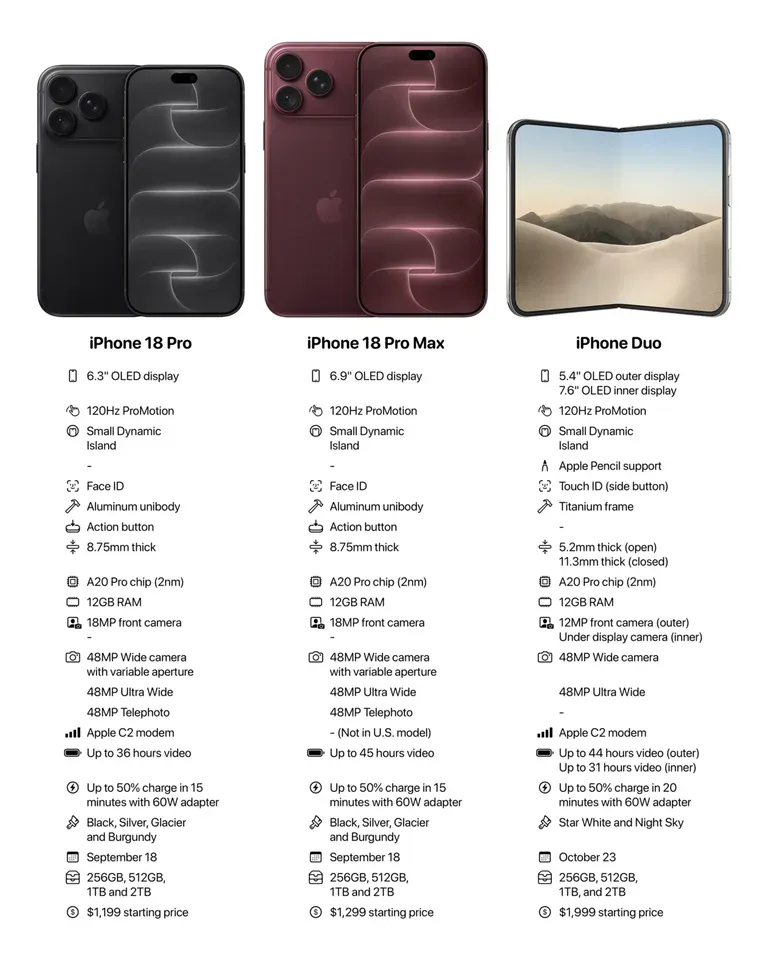
Look closely at this technical spec sheet, because the engineering shift is staggering. Apple redesigned their optical sensor array and increased background heart-rate telemetry by sixty times—sampling your bloodstream every five seconds instead of every five minutes. That wasn’t an innocent health upgrade; it was an explicit strike at Whoop’s thirty-six-hundred-million-dollar subscription moat. Sleep scores, strain readiness, longevity health ages, and metabolic blood-panel uploads were systematically ported into Apple Health, effectively rendering a rival three-hundred-dollar subscription obsolete overnight.
Cannibalizing a fitness startup is routine business in Big Tech, but the second weapon hidden inside this watch is where consumer protection breaks down. Buried beneath the keynote banter sat new audio intelligence features called Live Rewind and Siri Recap. On paper, it sounds like harmless software taking notes so you never forget a meeting. But when you inspect how that microphone operates in the wild, you realize Apple engineered an invasive acoustic dragnet without a warning light—BUT…
The Silent Wiretap and the Room Without Consent
The structural desperation driving this move comes down to sheer platform survival. Apple’s entire empire rests on tethering your attention to an illuminated glass rectangle in your pocket. If consumer habits shift toward ambient voice computing and wearable pins that bypass a touchscreen entirely, the iPhone’s toll booth collapses. Apple couldn’t sit on the sidelines while venture capital poured billions into standalone AI companions. They needed an always-on acoustic sensor strapped to your wrist, gathering real-world conversations before anyone else could.
Consider what this looks like for Marcus—an independent enterprise consultant sitting in a high-stakes client negotiation inside a closed conference room. Across the table, the prospective corporate client isn’t holding a dictaphone or recording on a laptop. He’s simply resting his forearm on the table, wearing a brand-new watch with a matte titanium bezel. Marcus never consented to being transcribed. He signed strict non-disclosure agreements, yet every confidential strategy leaving his lips is being ambiently ingested and organized into an AI summary.
That’s the chilling operational friction Apple introduced into public life. Unlike smart glasses that flash an overt LED recording beacon, this watch carries zero tally lights—and no speaker chime sounds when ambient summary mode is active. In private consultations, sensitive HR reviews, or intimate dinner tables, every spoken word gets pulverized into mathematical vectors. Under legal frameworks like California Penal Code Section 632, recording confidential communications without two-party consent is a criminal violation—yet Apple built a device that normalizes ambient wiretapping.
To shield themselves from public outrage and regulatory subpoenas, Apple engineered a masterclass in semantic misdirection. In their documentation, they aggressively repeat that raw audio is never recorded, never stored, and never accessible by third parties. How? By routing the continuous audio stream through a physically isolated silicon partition called the Secure Exclave. Because microphone data is processed by local neural networks and continuously overwritten inside hardware memory before pushing encrypted text to Private Cloud Compute, their lawyers claim no recording exists.
Notice what happened right after the keynote ended: trade publications and privacy researchers discovered this flagship Audio Intelligence engine wasn’t even shipping on launch day. Cupertino quietly delayed the rollout, tagging it as an invite-only beta for late twenty-twenty-six because internal compliance teams knew they were on legal thin ice. They knew shipping ambient acoustic transcription directly onto hundreds of millions of iPhones would trigger congressional hearings—THEREFORE, they chose to test this risky surveillance mechanism on wrist hardware first…
Silicon Exclaves and the Post-iPhone Panic
To understand why Apple held all the cards in that boardroom, you have to understand how enterprise leverage actually works behind closed doors. In modern systems, surface performance is cheap—the real moat is controlling infrastructure, contract architecture, and the market narrative. That’s why high-level founders, operators, and media syndicates partner with Unfair Studios to engineer high-retention narrative engines that claim category dominance. If your team is ready to claim absolute market authority, the private link is below. Now, look closely at how this machine was actually engineered under the hood to preserve Cupertino’s multi-trillion-dollar monopoly.
Look at the venture capital paper trail forming in San Francisco. Sam Altman at OpenAI didn’t just build software—he partnered directly with LoveFrom, the design firm founded by former Apple design chief Jony Ive, to architect screenless AI hardware. Backed by massive private capital, they poached Apple’s top hardware engineers to build a portable AI companion designed to replace the smartphone. Apple saw former executives using their own design playbook to build a post-iPhone computing platform, and they panicked.
This is where Apple’s custom silicon becomes their ultimate economic moat. By embedding the Secure Exclave directly into the S11 chip, Apple controls the vertical stack from the microphone diaphragm to the Private Cloud Compute cluster. Third-party developers like Whoop or OpenAI must pay thirty percent app store tolls and operate within strict sandbox permissions, but Apple gives its native software zero-latency access to the raw acoustic pipeline. They enforce a mandatory seven-day auto-deletion window on summaries, yet the behavioural graph remains locked.
Wait—examine the economic destruction this causes for specialized venture-backed startups. Whoop raised hundreds of millions of dollars building proprietary metabolic algorithms and sleep scoring engines, commanding a thirty-six-hundred-million-dollar valuation. But Apple doesn’t need to monetize health tracking as a standalone subscription. Apple treats high-end fitness tracking as a zero-margin loss leader to sell hardware. By bundling identical longevity scoring and blood-test lab analysis directly into the operating system for free, they starve their competitor’s cash flow while expanding their own moat.
Notice the balance-sheet vulnerability hiding behind this defensive posture. For twenty years, Apple’s profits were driven by voluntary consumer transactions—people willingly purchasing beautiful screens they loved to look at. But ambient computing is fundamentally different; it operates by invisible extraction. By turning hardware into an involuntary surveillance node to stave off OpenAI and LoveFrom, Apple exposed their corporate balance sheet to systemic regulatory contagion. If sovereign regulators rule that ambient processing violates wiretap covenants, Apple’s entire next-generation hardware roadmap faces immediate injunctions.
The Privacy Halo and the Architecture of Total Extraction
Why does the public let Apple get away with a surveillance architecture that would spark nationwide boycotts if deployed by Meta or Google? The answer lies in the psychological power of brand idolatry. For over a decade, Apple poured billions into sleek marketing campaigns proclaiming that what happens on your iPhone stays on your iPhone. They built an impenetrable halo of privacy-first moral superiority. Consumers bought that narrative so completely that when Apple places an ambient listener on their wrist, the reaction is applause.
Look at how easily human convenience overrides collective boundaries. We convince ourselves that having a digital safety net—a double-tap feature that recalls the last fifteen seconds of a conversation—is just a handy memory tool for busy professionals. We tell ourselves that having Siri automatically summarize afternoon meetings saves us time. But in that bargain, we silently surrender the expectation of privacy for every friend, colleague, and stranger who walks within earshot of our wrist. The consumer gets convenience, while Apple secures total awareness.
Notice where this trajectory leads once the cultural taboo evaporates. The Apple Watch is merely the opening wedge. Supply chain leaks already point toward camera-equipped AirPods designed to process real-time visual landmarks through infrared sensors, using the exact same semantic privacy defenses. If you accept an always-on microphone because the raw audio stays inside a Secure Exclave, you will inevitably accept always-on cameras under the identical corporate promise. Step by step, the architecture of total observation becomes invisible, woven into luxury accessories we wear daily.
This brings us to the ultimate reckoning between public perception and cold structural reality. The comfortable myth that Apple exists as an ethical guardian protecting your digital rights against predatory tech monopolies is dead. The reality is that Apple is an embattled empire executing brutal platform leverage to kill specialized competitors and barricade its castle against generative artificial intelligence. When faced with the choice between defending human privacy and losing market dominance to the next computing paradigm, Cupertino didn’t hesitate—they weaponized the microphone.
They aren’t just selling you a luxury smartwatch; they’re deploying a private infrastructure designed to capture the physical world before their rivals can touch it. Because category kings and untouchable empires aren’t built on luck—they are engineered through counter-intuitive mechanics that rewrite the rules of the game. The complete case study field manual, growth architecture diagrams, and action grids for this breakdown are now live inside The Vault at unfairsociety.com. Link is pinned below. If you want to see how this same monopolistic playbook is quietly tearing through enterprise software, click the breakdown on your screen right now.